
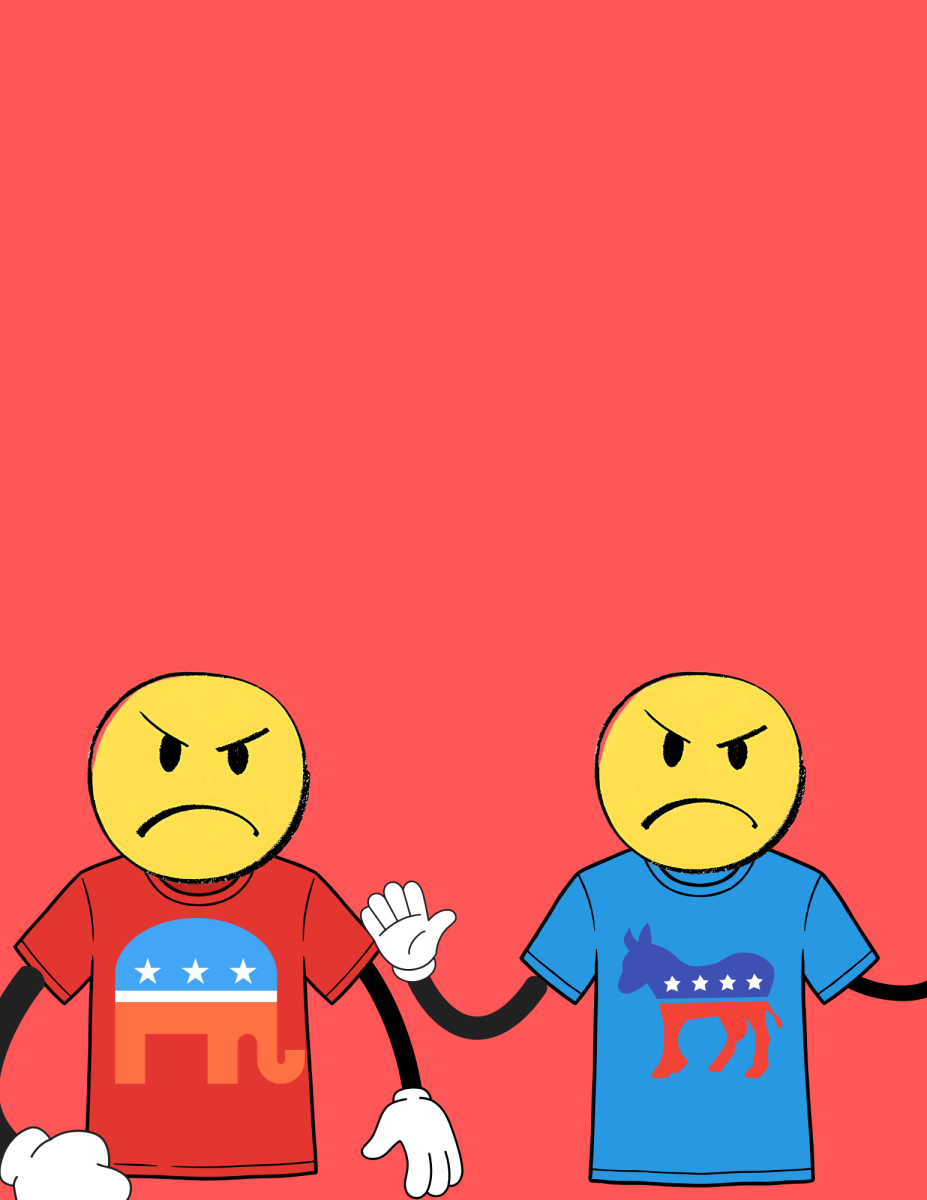
Politics are no longer just a topic reserved for television debates or social media feeds. They are showing up in hallways, classrooms and conversations between friends.
As national political tensions rise, some students say those divisions are beginning to surface within their own peer groups. Students report noticing differences in political beliefs influencing friendships, classroom discussions, and how comfortable people feel by expressing their opinions at school.
Sophomore Dylan Martinez said he has become increasingly aware of the growing divide among students, though he believes it is not entirely negative.
“I think so, but it also has some unification to it,” Martinez said.
Martinez explained that students often gravitate toward peers who share similar beliefs, which can unintentionally deepen separation.
“People are friends with other people who share the same political opinions,” Martinez said. “This then further deepens the divide.”
Other students believe the issue stems from broader systems rather than individual choices. Jumana Abdulsalam said political structures and adolescence contribute to polarization.
“I think the two-party system itself kind of divides the nation,” Abdulsalam said. “You can see that same effect within our student population.”
Abdulsalam added that students are still forming their identities, which can intensify disagreements.
“It’s more evident in students because they’re still developing their political identity,” she said.
Recent national news has also heightened concerns. Some students pointed to increased political discourse following reports involving political commentator Charlie Kirk, which sparked intense conversations among students.
“With recent events in the news and whatnot, there’s been a lot of discourse between the students in the school,” sophomore Giovanni Jamil said.
Jamil said students worry that those discussions could cross boundaries.
“Many students are worried that this could cross new lines within the school that could be bad,” he said.
Religion has also been mentioned as a potential factor in the political division. Sophomore Anton Lucaj said faith can influence beliefs, but it does not automatically divide students.
“No, because even without looking at it religiously, you can still agree with one side and disagree with the other,” Lucaj said.
Teachers have noticed the tension as well but remain optimistic. Government teacher Carolyn Frischman said political division is not new and does not define the school community.
“There has been some degree of division between students and in our country at large over politics,” Frischman said.
She added that the current moment is not unprecedented.
“I would say that although this is not the only time,” Frischman said. “Or even the most politically divided country and student body have ever been.”
Frischman said she believes students can move forward together.
“Though we have hard times, we have a future to look forward to together and undivided,” she said.


